Posts

Showing posts with the label MNC

Impact of MNCs on the national economy - 4.4.1
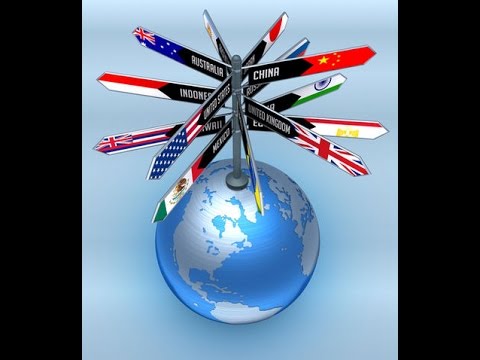
Image
Multinational Corporation (MNC) - is a business that is based or registered in one country but has outlets/affiliates or does business in other countries.  Such companies have offices and/or factories in different countries (typically emerging economies or undeveloped countries due to cost savings) and usually have a centralised head office (typically in western markets e.g. UK and US) where they coordinate global management. Balance of payments - A record of a country's trade/transactions with the rest of the world. A surplus is when the sum of exports of goods/services/investment income/transfers is greater than imports. A deficit is when the sum of exports of goods/services/investment income/transfers is less than imports. Foreign direct investment (FDI) - is an investment in a business by an investor from another country for which the foreign investor has control over the company purchased. Transfer pricing - Two companies that are part of the same MNC use interna...

Impact of MNCs on the local economy - 4.4.1

Image
Multinational Corporation (MNC) - is a business that is based or registered in one country but has outlets/affiliates or does business in other countries.  Such companies have offices and/or factories in different countries (typically emerging economies or undeveloped countries due to cost savings) and usually have a centralised head office (typically in western markets e.g. UK and US) where they coordinate global management. Characteristics of a MNC include; Dominant players in the market Complex structures, multi-site and multi-product Grown through organic and inorganic growth Heavy investment in R&D Globally recognised brands Globalisation is one of the major reasons for the growth in MNCs. A number of businesses in order to grow and develop have had to take on a global or internationak perspective, MNCs have also caused further globalisation. MNCs impact the local economy in the following ways; Local labour, wages, working conditions and job creation Loca...

Global marketing strategy and global localisation (glocalisation) - 4.3.1

Global marketing strategy - A product strategy to increase sales through promotion and advertisements to the international market. It focuses on the 4Ps - Price, Place, Promotion and Product - on a range of foreign markets. Marketing strategy - A process to allow a bsuiness to focus limited resources on the best opportunities to increase sales and thereby achieve a sustainable competitive advantage. Glocalisation - is the adaptation of a global marketing strategy in order to meet the requirements of local geographic markets. The term is a mix of globalisation and localisation. MNCs such as Coca-cola and McDonald's use the same global marketing strategies in each market in which they operate, which has the advantage of economies of scale across global markets, called global brands. This would be a transnational corporation approach which is also used by Rolls-Royce cars, Chanel handbags and Tiffany jewellery, all luxury products. However, businesses increasingly have found t...