Posts

Showing posts with the label disadvantages

Impact of MNCs on the national economy - 4.4.1
Image
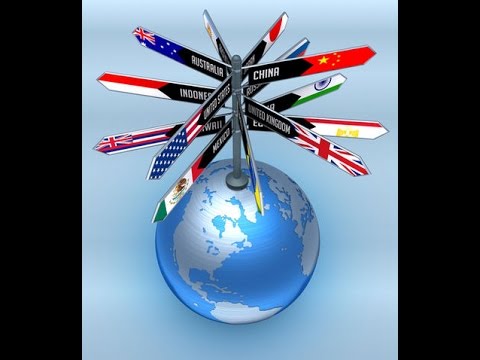
Multinational Corporation (MNC) - is a business that is based or registered in one country but has outlets/affiliates or does business in other countries.  Such companies have offices and/or factories in different countries (typically emerging economies or undeveloped countries due to cost savings) and usually have a centralised head office (typically in western markets e.g. UK and US) where they coordinate global management. Balance of payments - A record of a country's trade/transactions with the rest of the world. A surplus is when the sum of exports of goods/services/investment income/transfers is greater than imports. A deficit is when the sum of exports of goods/services/investment income/transfers is less than imports. Foreign direct investment (FDI) - is an investment in a business by an investor from another country for which the foreign investor has control over the company purchased. Transfer pricing - Two companies that are part of the same MNC use interna...

Impact of MNCs on the local economy - 4.4.1

Image
Multinational Corporation (MNC) - is a business that is based or registered in one country but has outlets/affiliates or does business in other countries.  Such companies have offices and/or factories in different countries (typically emerging economies or undeveloped countries due to cost savings) and usually have a centralised head office (typically in western markets e.g. UK and US) where they coordinate global management. Characteristics of a MNC include; Dominant players in the market Complex structures, multi-site and multi-product Grown through organic and inorganic growth Heavy investment in R&D Globally recognised brands Globalisation is one of the major reasons for the growth in MNCs. A number of businesses in order to grow and develop have had to take on a global or internationak perspective, MNCs have also caused further globalisation. MNCs impact the local economy in the following ways; Local labour, wages, working conditions and job creation Loca...

Global Marketing - Marketing Approaches 4.3.1

Ethnocentric - The domestic markets values is the superior market, and so ignores the values of other countries/markets in which their product exists. General marketing reproduced overseas for their product and no adaptation of product to meet local needs.  Therefore, products are marketed in foreign countres based on the perceived superiority of the home nation's values. To some extent, this approach ignores local customs, culture and religion. In order for this to be a successful approach, the markets need to be similar. For example, Nissan startd out using an ethnocentric approach to car sales where all cars overseas were exactly the same as those in the local Japanese domestic market. Among the benefits of an ethnocentric approach is the fact that standardisation provides significant economies of scale and much lower marketing costs as there is little or no research required for new markets. A drawback is the risk of losing sales as the business is not market orientate...

Extending the product life-cycle by selling in multiple markets - 4.2.1

Image
Product lifecycle - An important concept in marketing. It describes the stages a product goes through from when it was first thought of until it finally is removed from the market. Not all products reach this final stage. Some continue to grow and others rise and fall. One of the main reasons for operating in a global market is to extend the lifecycle of a product. According to the product lifecycle, a product will peak in its maturity stage and then start to decline, resulting in less profit. An extension strategy used by businesses is to introduce the product to a more international market/less mature or saturated market, effectively extending the life of the product. This might require adapting the product to suit local tastes or a large promotional budget to raise awareness. However, if successful, this might extend the life of the product for a number of years. Advantages of selling products in multiple markers include; Continued profitable returns Potential economies of ...

Protectionism (Government legislation, Domestic Subsidies and Embargoes) - 4.1.4

Protectionism - is any attempt by a country, trade bloc or region to impose restrictions on the import of goods and services. Government legislation - legislation imposed by the government in order to both protect consumers and restrict imports. This might be complex legal forms, health and safety inspections and specific product specifications. Benefits of government legislation is that it allows domestic firms to flourish in the market, but it may provoke retaliation from another country is the ban is seen as unfair. Domestic subsidies - are payments to encourage domestic production by lowering their production costs and improve competitiveness. Low or no interest loans can be used to fund the dumping of products in overseas markets. Well-known subsidies include the Common Agricultural Policy in the EU, or cotton subsidies for US farmers and farm subsidies introduced by countries such as Russia. Advantages of subsidies include; The protection of local jobs and indust...

Protectionism (Import Quotas) - 4.1.4

Protectionism - is any attempt by a country, trade bloc or region to impose restrictions on the import of goods and services. Import Quotas - A type of protectionist measure on trade that sets a restriction on the physical limit on quantity of a good that can be imported into a country in a given period of time. Quotas, like other trade restrictions, are typically used to benefit the producers of a good at the expense of the consumers in that economy. Import quotas are quantitative limits on the level of imports allowed or a limit to the value of imports permitted into a country in a given period of time. Often licenses are granted to importers to the exclusion of other global businesses. Quotas do not normally bring in any tax revenue for the government. Benefits of import quotas include; Keeping the volume of imports unchanged even when demand for imported products increases Local jobs may be created or protected, leading to a greater tax revenue More flexible than tariffs ...

Protectionism (Tariffs) - 4.1.4

Tariffs - a tax or duty that raises the price of imported products. Protectionism - is any attempt by a country, trade bloc or region to impose restrictions on the import of goods and services. Dumping - Over-production in developed countries may be released into the markets of developing nations which undercuts domestic prices and domestic producers may be forced to leave the market. Balance of payments =  Exports - Imports. This explains the financial relationshio between the UK and rhe rest of the world. A country may use protectionist measures, because of a concern about trade imbalances (too many imports compared to few exports), to protect jobs or to protect politically sensitive industries such as shipbuilding. A tariff is a tax or duty that raises the price of imported products. The price rise is likely to reduce demand for the item and also encourage local entrepreneurs to produce more. For example, according to BBC News, in March 2016 the US imposed a 500% ...

Impact of external influences - PESTLE 3.1.4

Image
PESTLE - is a method used to analyse external influences on a business, in particular Political, Economic, Social, Technological, Legal and Environmental influences. External environment - is all of those factors outside of their control of a business that will impact on its day to day operations, decision making and strategies. Fiscal Policy - They ways the government can adjust spending and taxation to influence the national economy Monetary policy - The ways the government, via the Bank of England, can alter how much money is circulating in the economy and the level of interest rates to create stable prices and a set inflation target. PESTLE can be used by a business to make the most of factors that are seen as beneficial and minimise the impact of factors that have a negative impact. The advantage of PESTLE is that like SWOT it can help identify area of opportunity and threat. A disadvantage is that time and money need to be spent gathering data to perform the analysis. Un...

Business Ethics - Ethics of strategic decision 3.4.4

Image
Business ethics - The moral principles that guide the way a business behaves Trade-off - is when one decision results in the loss of an alternative outcome, for each decision made there may be multiple trade-offs In business ethical standards play a crucial role in the decision-making: Used by individuals to make choices about how to behave They define acceptable conduct in business Should underpin decision making An ethical decision is one that is both legal and meets the shared ethical standards of the relevant business community Note: different countries and cultures have different attitudes to what constitutes acceptable ethical behaviour. Ethics in strategic decisions include: 1) Location decisions Ability to exploit workers Impact on the environment 2) Mergers, takeovers and retrenchment (reducing costs of the business e.g. staffing) Impact on workers Ability to exploit customers or control suppliers Transparency of deals 3) Corruption Dealing with auth...

Investment Appraisal - Simple payback - 3.3.2

Investment Appraisal - The use of numerical techniques to predict the financial outcomes of potential capital investments. Payback - The length of time (payback period) required to recover the cost of an investment in a project. FORMULA  - PAYBACK NET CASH FLOW IN YEAR THE INITIAL INVESTMENT IS REPAID / 12 MONTHS = £?  REMAINING CASH TO BE PAID IN FINAL YEAR TO REACH THE REPAYMENT TOTAL / £? = DECIMAL = MONTHS A BUSINESS WANTS THE LOWEST PAYBACK TIME IN ORDER TO BECOME PROFITABLE QUICKER. Interpretarion of payback gives a prediction of when the investment will be paid back and more importantly the point at which it will start to  make a profit for the business. Businesses can use payback to consider a number of potential options and then choose the investment with the fastest payback. Alternatively, businesses may allow investment only if payback is within a maximum period of time, for example 24 months. Advantages Disadvantages ...

Organic Growth - 3.2.3

Organic growth - Where a business expands through increased output, sales and market share via strategies developed within the business causing revenues and profits to grow. Inorganic growth - Growth that comes from outside the business e.g. through a takeover or joint venture. Organic growth Inorganic growth May mean increasing existing production capacity through investment in machinery and technology May mean increasing production capacity through the merger with or takeover of another business May mean developing and launching new products The product range will be expanded through the takeover/merger so new product development is less necessary May mean finding new markets Growth can be achieved relatively quickly as employees, capacity and distribution are already in place Is likely to take longer to achieve, as capacity will need further employees, machinery and distribution resources,...