Posts

Showing posts with the label economies of scale

Global marketing - Application and adaptation of the marketing mix (4Ps) to global markets - 4.3.1.
Image
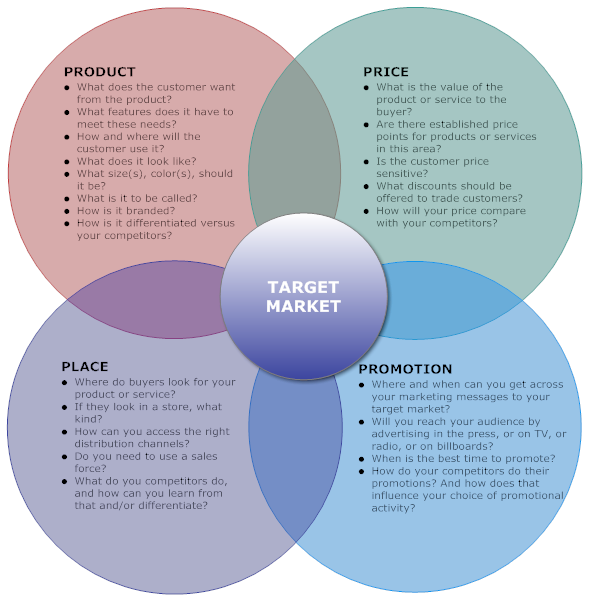
Marketing mix - The set of actions, or tactics, that a company uses to promote its brand or product in the market. The 4Ps - price, product, place and, promotion - make up a typical marketing mix.  The marketing mix needs to be applied carefully in order to meet the requirements of customers in all markets, which is a challenge for a business. Ideally, a business would want to market the same product, at the same price, using the same promotional techniques and distribute and sell through the same outlets. However, this might have to be changed to cater for the different needs of national markets. PRODUCT A firm will need to consider whether a standardised product can be sold on all global markets. Then it can build up an associated product range. This might be easier for a technological business as opposed to a food business. PRICE Price strategies that have worked in other economies such as western markets are unlikely to be successful in emerging and undeveloped ...

Global Competitiveness - Competitive advantage 4.2.5

Image
Global competitiveness -  is the ability of a business, usually a MNC, to perform better than its rivals across markets in different countries. This can be achieved through performance on price and quality or customers' perception of these factors.  Competitive advantage - is an advantage over competitors gained by offering consumers greater value, either by means of lower prices or by providing greater benefits and service that justifies higher prices.    Cost competitiveness - the differences in unit costs between competitors. Outsourcing -  A practice used by companies to reduce costs by transferring portions of work to outside suppliers rather than completing it internally. Outsourcing is an effective cost-saving strategy when used properly. Offshoring -  When a company moves various operations to another country for reasons such as lower labour costs or more favourable economic conditions in that other country. This topic is split into two; ...

Possibility of off-shoring and outsourcing - 4.2.1

A key difference between offshoring and outsourcing is that the offshored element of the business is still part of the same global business but outsourcing means a completely separate business takes over the work. Offshoring - When a company moves various operations to another country for reasons such as lower labour costs or more favourable economic conditions in that other country. The key reasons for this is cost minimisation as the production process can be undertaken at a reduced costs in comparison to the domestic economy. Closeness to market will reduce transport costs for businesses and might allow for easier access to consumers, particularly if operating in the country being targeted e.g. Jaguar Land Rover have set up production in China. As well as this they will take advanatge of economies of scale from operating in larger international markets and having access to more specialised suppliers and services.  However, offshoring includes the fact that public and emp...

Conditions that prompt trade (Pull factors) - 4.2.1

Pull factors - are those that attract a business to a global market. These may include lower levels of competition or an untapped market or customers. Pull factors are the opportunities a business may see for expansion into a foreign market. The factors are linked to the foreign market in which the businesses wishes to operate. Economies of scale are present when unit costs fall as output rises. Globalisation has meant a rise in opportunities for international businesses to reduce unit costs by increasing sales volumes to new and emerging markets, thus being able to buy the raw materials to make the products in bulk. Businesses have also moved production to new markets where costs such as wages are significantly cheaper than in their domestic market. Risk spreading is a benefit from moving into markers in order to reduce dependence on the home market. A wet summer in Britian does not worry Wall's ice cream as it sells ice cream in lots of overseas markets. Therefore they nega...

International Trade and Business Growth - The link between business specialisation and competitive advantage - 4.1.2

Competitive advantage -  A sustainable advantage over the competitors in the long term, gained by offering consumers greater value, either by means of lower prices or by providing greater benefits and service that justifies higher price. Specialisation - When a business concentrates on a product or task and in many cases means producing only a small number of products. Specialisation is particularly important when competing in international markets as it can create a competitive advantage for the business and act as a barrier to stop others from entering the market. Specialisation increases output as economic units become more effective and efficient in what they produce due to: Greater understanding of the requirements of production Each economic unit can specialise in what they are best at Efficient use of time as there is no switching between tasks Technical economies of scale such as capital equipment is used to produce goods and services The increased output can...

Objectives of growth - Economies of scale 3.2.1

Image
Internal economies of scale - The cost savings that can come about from the growth of the business itself e.g. as it increases the scale of its current operations this leads to a fall in unit costs. External economies of scale - The cost savings that come about from growth outside a business but within the market or industry in which it operates. All competitors benefit Growth - A common corporate objective which means expanding the sales revenue of a business, probably in the hope that profits will increase too. One reason for a business wanting to grow it to achieve economies of scale. By growing the scale of output, a business can achieve lower unit costs which can thereby improve a firm's competitiveness. Unit costs = Total production costs in period (£) / Total output in period (units) = £? How can economies of scale provide a Competitive Advantage?    The main types of Internal economies of scale are: Purchasing Technical Managerial Purchasing = B...