Posts

Showing posts with the label infrastructure

Global marketing - Application and adaptation of the marketing mix (4Ps) to global markets - 4.3.1.
Image
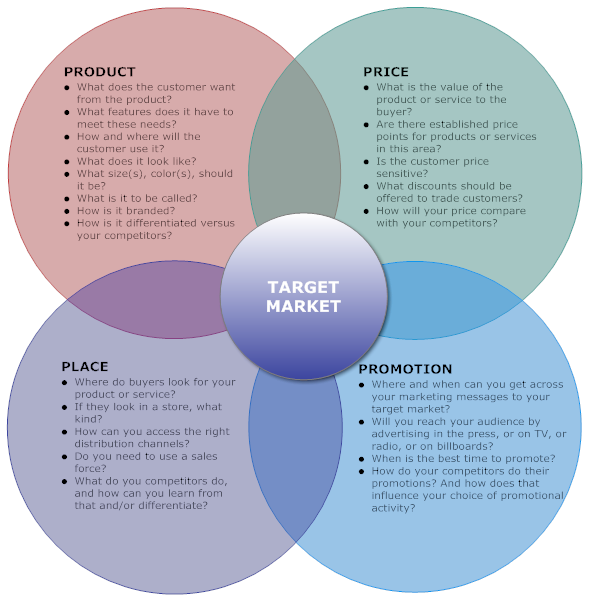
Marketing mix - The set of actions, or tactics, that a company uses to promote its brand or product in the market. The 4Ps - price, product, place and, promotion - make up a typical marketing mix.  The marketing mix needs to be applied carefully in order to meet the requirements of customers in all markets, which is a challenge for a business. Ideally, a business would want to market the same product, at the same price, using the same promotional techniques and distribute and sell through the same outlets. However, this might have to be changed to cater for the different needs of national markets. PRODUCT A firm will need to consider whether a standardised product can be sold on all global markets. Then it can build up an associated product range. This might be easier for a technological business as opposed to a food business. PRICE Price strategies that have worked in other economies such as western markets are unlikely to be successful in emerging and undeveloped ...

Assessment of a country as a production location - 4.2.3.

Production - A process of workers combining various material inputs and know-how in order to make something for consumption by the customer, known as the output. Production can also be defined as the total amount of output produced in a time period. The more that can be produced in a specific period of time, the more efficient the business becomes in using its resources. There are 9 factors that have to be considered when assessing a country as a production location; Costs of production Skills and availability of labour force Infrastructure Location in trade bloc Government incentives Ease of doing business Political stability Natural resources Likely return on investment COSTS OF PRODUCTION In highly competitive mass markes, having low costs of production will be a significant advantage. This means low wage cost will see FDI to the country in order to take advantage of the labour force and its low wage costs. This allows businesses to drive costs down, allowing the...

Assessment of a country as a market - 4.2.2

Image
Market attractiveness - A measure of the potential value of a particular market in a country. It can include short-term or long-term profit and growth rate of the market. A range of tools can be used to assess market attractiveness for a country, such as the Boston Matrix, PESTLE and Porter's Five Forces. Disposable income - the total income of an individual has available to spend after paying income taxes and the addition of benefits. Ease of doing business - how accessible markets are for a business Infrastructure - the physical systems that a country (or business) require to operate efficiently Political Stability - an absence of excessive fluctuations in the economy. There are several key issues to consider when assessing the market attractiveness, for example; Levels and growth of disposable income Ease of doing business Infrastructure Political stability Exchange rate LEVELS AND GROWTH OF DISPOSABLE INCOME Changes in disposable income are believed to have...