Posts

Showing posts with the label tax

Impact of MNCs on the national economy - 4.4.1
Image
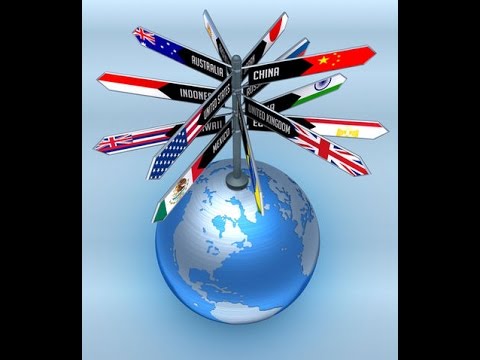
Multinational Corporation (MNC) - is a business that is based or registered in one country but has outlets/affiliates or does business in other countries.  Such companies have offices and/or factories in different countries (typically emerging economies or undeveloped countries due to cost savings) and usually have a centralised head office (typically in western markets e.g. UK and US) where they coordinate global management. Balance of payments - A record of a country's trade/transactions with the rest of the world. A surplus is when the sum of exports of goods/services/investment income/transfers is greater than imports. A deficit is when the sum of exports of goods/services/investment income/transfers is less than imports. Foreign direct investment (FDI) - is an investment in a business by an investor from another country for which the foreign investor has control over the company purchased. Transfer pricing - Two companies that are part of the same MNC use interna...

Protectionism (Import Quotas) - 4.1.4

Protectionism - is any attempt by a country, trade bloc or region to impose restrictions on the import of goods and services. Import Quotas - A type of protectionist measure on trade that sets a restriction on the physical limit on quantity of a good that can be imported into a country in a given period of time. Quotas, like other trade restrictions, are typically used to benefit the producers of a good at the expense of the consumers in that economy. Import quotas are quantitative limits on the level of imports allowed or a limit to the value of imports permitted into a country in a given period of time. Often licenses are granted to importers to the exclusion of other global businesses. Quotas do not normally bring in any tax revenue for the government. Benefits of import quotas include; Keeping the volume of imports unchanged even when demand for imported products increases Local jobs may be created or protected, leading to a greater tax revenue More flexible than tariffs ...

Protectionism (Tariffs) - 4.1.4

Tariffs - a tax or duty that raises the price of imported products. Protectionism - is any attempt by a country, trade bloc or region to impose restrictions on the import of goods and services. Dumping - Over-production in developed countries may be released into the markets of developing nations which undercuts domestic prices and domestic producers may be forced to leave the market. Balance of payments =  Exports - Imports. This explains the financial relationshio between the UK and rhe rest of the world. A country may use protectionist measures, because of a concern about trade imbalances (too many imports compared to few exports), to protect jobs or to protect politically sensitive industries such as shipbuilding. A tariff is a tax or duty that raises the price of imported products. The price rise is likely to reduce demand for the item and also encourage local entrepreneurs to produce more. For example, according to BBC News, in March 2016 the US imposed a 500% ...

Economic influences - Taxation 2.5.1

Image
Taxation - Charges on individuals and organisations by governments. Direct Taxation - This includes income tax, National insurance and corporation tax - direct taxes are charged on earnings. Indirect Taxation - This includes VAT, excise duties (e.g. on petrol and alcohol), car tax, insurance tax and others. In 2015, the government raised a total of £647 billion from taxation. 94% came from central sources such as income tax, corporation tax and indirect taxes , just 6% came from local taxation (council tax) Direct taxation is levied on earnings and will affect the level of a consumers' disposable income. For example, an increase in income tax will reduce sales of many products and services, with some expectations. Indirect taxation such as VAT will have a similar effect; an increase in the rate of VAT will increase prices (although food eaten at home and a few other products such as housing, books and children's clothes carry no VAT). This will reduce consum...

Profit 2.3.1

Profit - surplus of revenue when costs are covered Gross profit -  Gross profit is the profit a company makes after deducting the costs associated with making and selling its products, or the costs associated with providing its services. Operating profit -  Records how much profit has been made in total from the trading activities of the business before any account is taken of how the business is financed. Statement of comprehensive income - A formal financial document that summarises a business' trading activities and expenses to show whether it has made a profit or loss. Profit margin - tells the business just what percentage of its turnover is actually profit. It is the ratio of profit to sales revenue as a percentage PROFIT = TOTAL REVENUE - TOTAL COSTS There are 3 types of profit; Gro...

METHODS OF FINANCE - Grants

Grants -  Are fixed amounts of capital provided to business by the government or other organisations to fund specific projects. This could be in the form of actual monetary grants, subsidies and tax relief schemes. This method of finance operates both on a national and regional level. This can be really useful for new small businesses. Certain factors do come along with grants to see if you qualify for receiving one, such as; Locate in an area of high deprivation Provide employment Reduce negative environmental impacts Support a good cause This is also good for businesses needing a large sum of capital to injected into their businesses.

Supply 1.2.2

Supply - the quantity of a good or service that a producer is willing and able to supply onto the market at a given price in a given time period. Profit motive - the motivation of firms that operate so as to maximize their profits. Indirect Taxes - Taxes not connected to income or proftit Government subsidy - Government payment that covers some of the cost of an economic activity. ☆ BASIC LAW OF SUPPLY ☆ The basic law of supply is that as a selling price of a product rises, so businesses expand supply to the market. The higher selling price acts as an incentive for businesses to produce more and it may also attract other suppliers into the market. There is a direct relationship between price and quantity supplied A rise in market prices brings about an expansion of supply - producers are responding to the profit motive. A fall in market prices brings about a contraction of supply - producers are not not responding to the profit motive. A movement along t...