Posts

Showing posts with the label technology

Impact of MNCs on the national economy - 4.4.1
Image
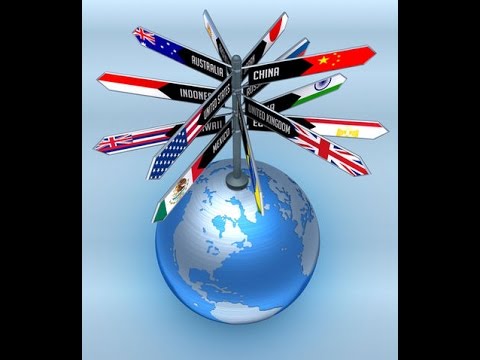
Multinational Corporation (MNC) - is a business that is based or registered in one country but has outlets/affiliates or does business in other countries.  Such companies have offices and/or factories in different countries (typically emerging economies or undeveloped countries due to cost savings) and usually have a centralised head office (typically in western markets e.g. UK and US) where they coordinate global management. Balance of payments - A record of a country's trade/transactions with the rest of the world. A surplus is when the sum of exports of goods/services/investment income/transfers is greater than imports. A deficit is when the sum of exports of goods/services/investment income/transfers is less than imports. Foreign direct investment (FDI) - is an investment in a business by an investor from another country for which the foreign investor has control over the company purchased. Transfer pricing - Two companies that are part of the same MNC use interna...

Dynamic Markets - 1.1.1

Dynamic markets - Markets which are constantly changing. The environment is dynamic, for example buyers may choose to buy less of one product and more of another. It can grow, change and decline very quickly Some markets are quite stable and change little over time. For example, the market for Kelloggs cornflakes has changed very little, although there are far more competing products than there were when they were invented in 1894. Market size and market share do not change much and there is little innovation. Other markets are far more dynamic, subject to rapid and continuous changes. All businesses must adapt to the changing nature of their markets. Reasons for dynamic markets constantly changing: Social trends Changes in technology Competitiveness Trends Consumer tastes Fashion Rising/Falling incomes Arrival of a superior product offered by competition External shocks Business have to adapt their marketing in response to these changes... If they do not keep up, the...

Supply 1.2.2

Supply - the quantity of a good or service that a producer is willing and able to supply onto the market at a given price in a given time period. Profit motive - the motivation of firms that operate so as to maximize their profits. Indirect Taxes - Taxes not connected to income or proftit Government subsidy - Government payment that covers some of the cost of an economic activity. ☆ BASIC LAW OF SUPPLY ☆ The basic law of supply is that as a selling price of a product rises, so businesses expand supply to the market. The higher selling price acts as an incentive for businesses to produce more and it may also attract other suppliers into the market. There is a direct relationship between price and quantity supplied A rise in market prices brings about an expansion of supply - producers are responding to the profit motive. A fall in market prices brings about a contraction of supply - producers are not not responding to the profit motive. A movement along t...