Posts

Global marketing - Application and adaptation of the marketing mix (4Ps) to global markets - 4.3.1.
Image
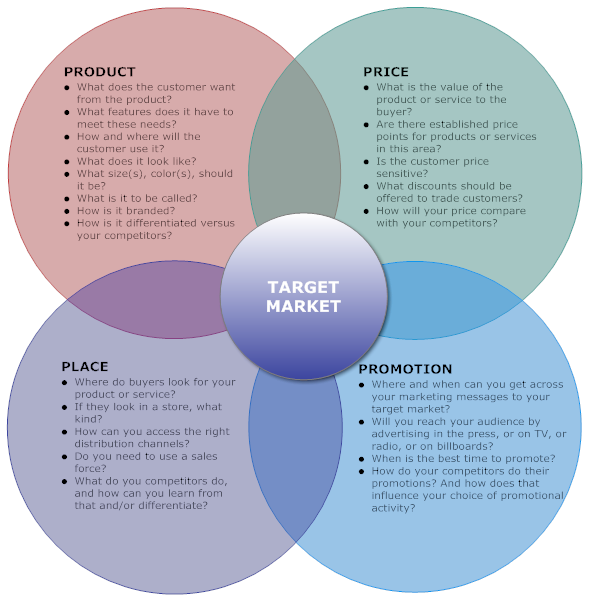
Marketing mix - The set of actions, or tactics, that a company uses to promote its brand or product in the market. The 4Ps - price, product, place and, promotion - make up a typical marketing mix.  The marketing mix needs to be applied carefully in order to meet the requirements of customers in all markets, which is a challenge for a business. Ideally, a business would want to market the same product, at the same price, using the same promotional techniques and distribute and sell through the same outlets. However, this might have to be changed to cater for the different needs of national markets. PRODUCT A firm will need to consider whether a standardised product can be sold on all global markets. Then it can build up an associated product range. This might be easier for a technological business as opposed to a food business. PRICE Price strategies that have worked in other economies such as western markets are unlikely to be successful in emerging and undeveloped ...

Global Marketing - Marketing Approaches 4.3.1

Ethnocentric - The domestic markets values is the superior market, and so ignores the values of other countries/markets in which their product exists. General marketing reproduced overseas for their product and no adaptation of product to meet local needs.  Therefore, products are marketed in foreign countres based on the perceived superiority of the home nation's values. To some extent, this approach ignores local customs, culture and religion. In order for this to be a successful approach, the markets need to be similar. For example, Nissan startd out using an ethnocentric approach to car sales where all cars overseas were exactly the same as those in the local Japanese domestic market. Among the benefits of an ethnocentric approach is the fact that standardisation provides significant economies of scale and much lower marketing costs as there is little or no research required for new markets. A drawback is the risk of losing sales as the business is not market orientate...

Global marketing strategy and global localisation (glocalisation) - 4.3.1

Global marketing strategy - A product strategy to increase sales through promotion and advertisements to the international market. It focuses on the 4Ps - Price, Place, Promotion and Product - on a range of foreign markets. Marketing strategy - A process to allow a bsuiness to focus limited resources on the best opportunities to increase sales and thereby achieve a sustainable competitive advantage. Glocalisation - is the adaptation of a global marketing strategy in order to meet the requirements of local geographic markets. The term is a mix of globalisation and localisation. MNCs such as Coca-cola and McDonald's use the same global marketing strategies in each market in which they operate, which has the advantage of economies of scale across global markets, called global brands. This would be a transnational corporation approach which is also used by Rolls-Royce cars, Chanel handbags and Tiffany jewellery, all luxury products. However, businesses increasingly have found t...

Global Competitiveness - Skill shortages and their impact on international competitiveness 4.2.5

Global competitiveness -  is the ability of a business, usually a MNC, to perform better than its rivals across markets in different countries. This can be achieved through performance on price and quality or customers' perception of these factors.  Demand for highly skilled workers is outstripping their supply. This is impacting heavily on global businesses, many of whom are producing differentiated products. There is an imbalance in the global economy, with too many low skilled workers and not enough skilled workers. This is partly accounted for because many low skilled jobs have now been replaced by machinery. Machines find it more difficult to replace highly skilled workers e.g. the creative industries.  A lack of ability to recruit skilled workers could lead to a decline in competitiveness as global businesses will not be able to take advantage of lower unit costs and/or higher-quality products. This will be a particular risk for businesses that take the differ...

Global Competitiveness - Competitive advantage 4.2.5

Image
Global competitiveness -  is the ability of a business, usually a MNC, to perform better than its rivals across markets in different countries. This can be achieved through performance on price and quality or customers' perception of these factors.  Competitive advantage - is an advantage over competitors gained by offering consumers greater value, either by means of lower prices or by providing greater benefits and service that justifies higher prices.    Cost competitiveness - the differences in unit costs between competitors. Outsourcing -  A practice used by companies to reduce costs by transferring portions of work to outside suppliers rather than completing it internally. Outsourcing is an effective cost-saving strategy when used properly. Offshoring -  When a company moves various operations to another country for reasons such as lower labour costs or more favourable economic conditions in that other country. This topic is split into two; ...

Global Competitiveness - The impact of movements in exchange rates - 4.2.5.

Image
Global competitiveness - is the ability of a business, usually a MNC, to perform better than its rivals across markets in different countries. This can be achieved through performance on price and quality or customers' perception of these factors. Exchange rates -  is the price of one currency expressed in terms of another e.g. £1 = $1.65. This means that an American would need to pay $1.65 to buy each £... or, we would need to pay 65p to buy each $. The exchange rate decides how much currency has to be spent by a business in order to buy a specific amount of another currency. Exchange rate movements are fluctuations in value between currencies, which can result in losses to businesses that import and export goods and to investors. EXCHANGE RATE APPRECIATES... This means that; Exports are less attractive in terms of price competitiveness and businesses will find it harder to compete with competitiors as their products will be more expensive in terms of the local currenc...

Reasons for global mergers or joint ventures - 4.2.4

Image
Global merger - is an agreement between two companies from different countries to join forces permenantly. They will become a MNC and these types of merger are likely to increase the power of the new business. Joint Venture - a separate business entity created by two or more parties acting as a collective tp set up a new business venture, involving shared ownerships, returns and risks. Patents -  a government authority or licence conferring a right or title for a set period, especially the sole right to exclude others from making, using, or selling an invention. Reasons for a global merger or joint venture; Spreading risk Entering new market/trade bloc Acquiring national/international brand name/patents Securing resources/supplies Maintaining/increasing global competitiveness. SPREADING RISK OVER DIFFERENT COUNTRIES/REGIONS By operating in a number of countries, a business reduces the risk associated with one individual country. This is because all countries will ...